Homeowner guide
Roof leaking in the rain? What to do first
Water coming through the ceiling in a downpour is worrying, but a few calm steps in the first hour protect your home and make the repair simpler. This is the advice Chris, who has been roofing for 25 years, gives homeowners across Surrey, West London and Berkshire.
The first hour
What to do when your roof starts leaking
Most leaks show up at the worst moment, in heavy rain and often at night. You cannot fix the roof from inside, but you can stop the water doing more damage while help is on the way. Work through these steps in order.
- 1
Catch the water. Put a bucket, bowl or saucepan under the drip with an old towel beneath it to stop the splashes, and empty it before it fills.
- 2
Move what you can. Shift furniture, rugs, bedding and anything electrical out of the way, or cover it with a plastic sheet or bin bags.
- 3
Keep clear of wet electrics. If water is coming through a light fitting or near a socket, do not touch the switch. Turn the power off at the fuse box only if you can reach it safely with dry hands, and have an electrician check it before it goes back on.
- 4
Stay out from under a sagging ceiling. If the ceiling has bulged or started to sag with water, keep everyone out of the room below until it has been looked at.
- 5
Check the loft if it is safe. With a torch, and standing only on the joists or boards, look for wet felt, a drip or daylight showing through. A bucket up there catches water before it reaches the ceiling.
- 6
Take photos. Photograph the wet patch inside and anything you can see from the ground outside, such as tiles lying in the garden. They help us understand the problem before we arrive, and they are worth keeping for your home insurer.
- 7
Call us. Ring Chris on 07517 574 551. We offer 24/7 emergency call-out and will put a temporary fix in place, such as sheeting or a tarp, to keep the weather out until the permanent repair is done.
Stay safe
What not to do
Do not go up on the roof
Wet tiles and slates are slippery and wind makes a ladder dangerous. Leave the outside of the roof to someone with the right access equipment to work safely at height.
Do not reach for the sealant
Sealant squeezed over the nearest crack rarely holds for long and can hide the real cause. A proper repair starts with finding where the water is actually getting in.
Do not trust the stain
Water runs along felt, rafters and pipes before it drips, so the wet patch on the ceiling is often nowhere near the hole in the roof.
Do not wait for it to dry out
By the time a damp patch appears the leak has usually been running a while. Left over winter, a small leak soaks insulation and timber and becomes a bigger, wetter job.
Do not assume you need a new roof
A leak does not always mean replacement. More often than not a repair will do the job on a roof that is otherwise in good order, so ask for an honest look first.
Do not ignore the early signs
Tiles in the garden after a windy night, grit from the tiles collecting in the gutters or daylight in the loft are all worth a look before the next downpour.
Why it happens
Why roofs leak when it rains
Most rain leaks come from a handful of places, and these are the ones Chris checks first.
- Slipped, cracked or missing tiles and slates
- Lead flashing around chimneys and walls
- Cracked or loose ridge tiles
- Blocked or split valleys
- Perished or split felt, especially on flat roofs
- Blocked or overflowing gutters pushing water back under the tiles
Heavy rain driven by the wind finds weak spots that a light shower never reaches, which is why some roofs only leak in a storm.
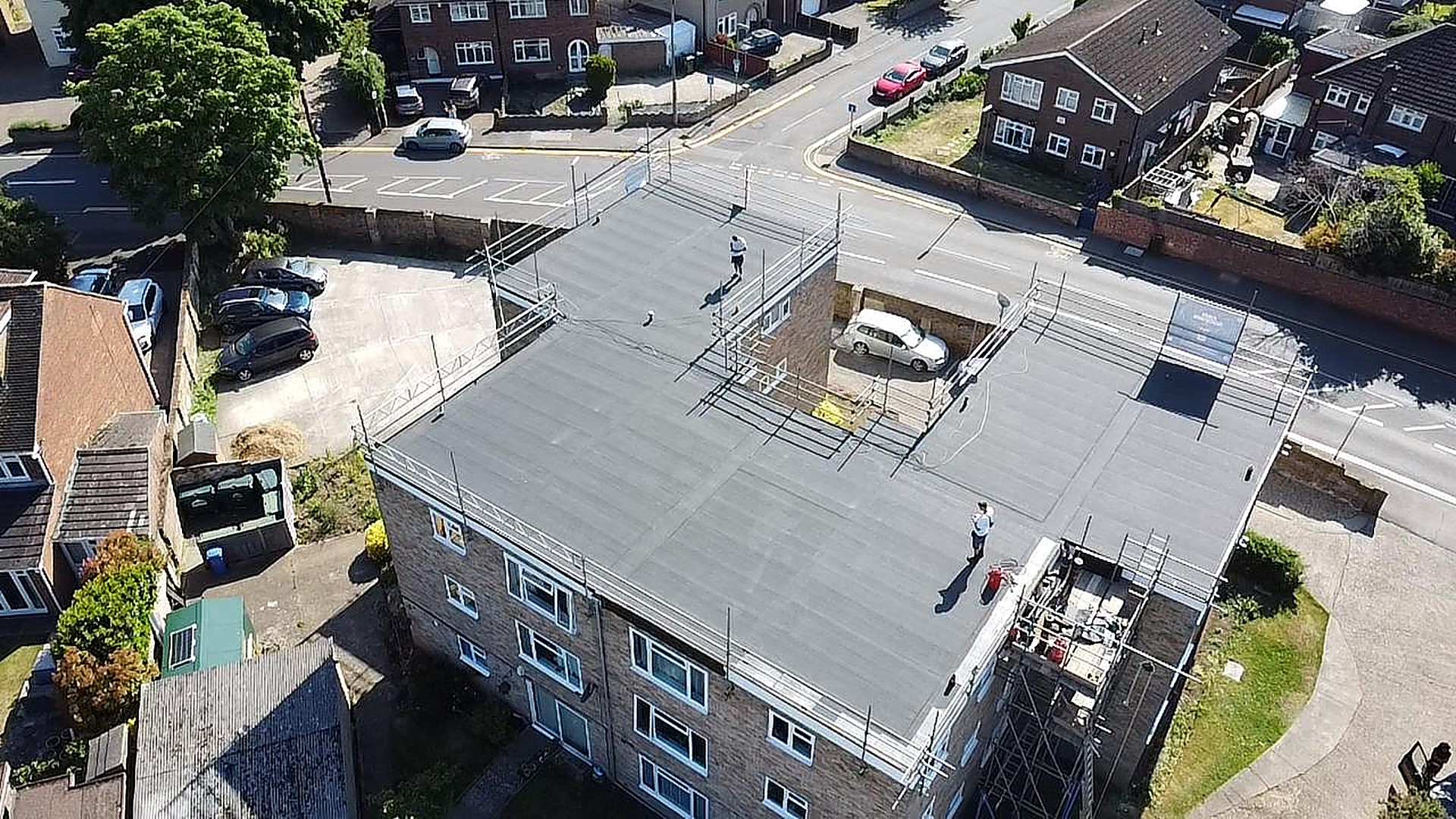
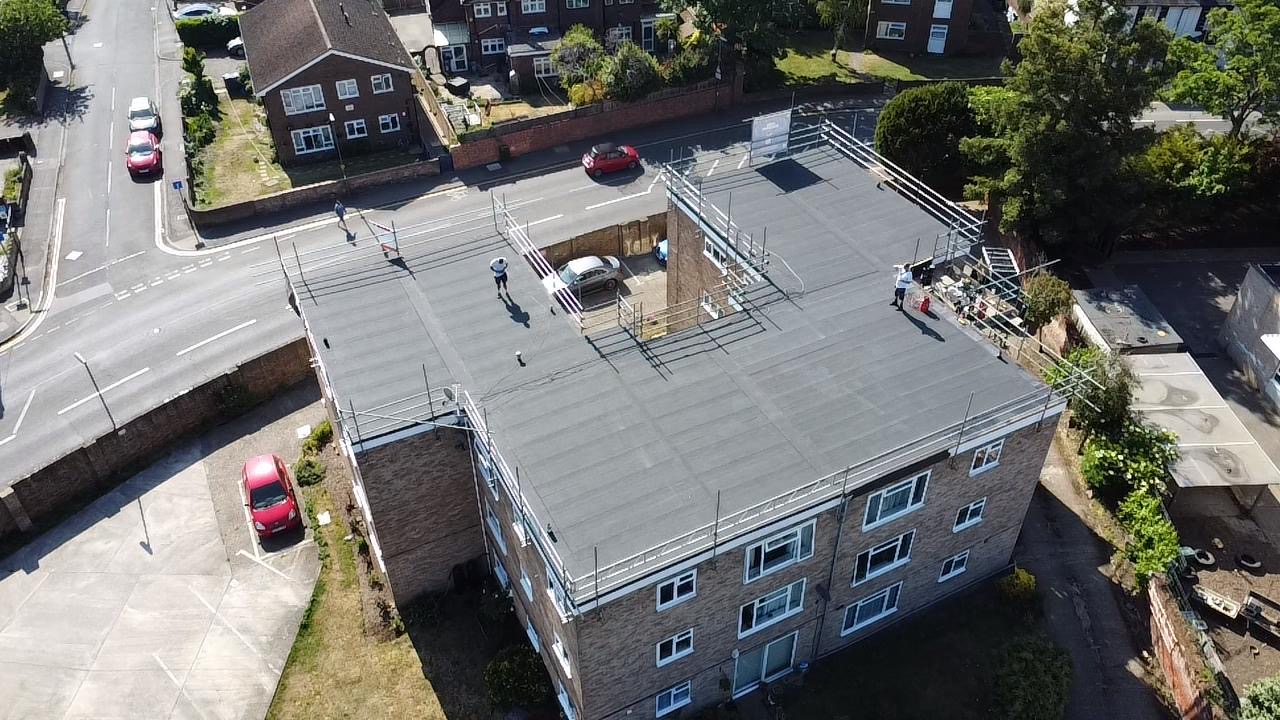
Finding the real source matters more than anything else. Chris uses a drone to inspect the whole roof, including the hard to reach places, and can show you in real time exactly where the problem is. We trace the leak back to where the water is getting in before we touch anything, so the repair actually holds.
Getting it repaired
What happens when you call CBM Roofing
We stop the water first
If it is an emergency we come out 24/7 and put a temporary fix in place, such as sheeting or a tarp, so no more rain gets in.
We find the real cause
We check the tiles, flashing, ridge, valleys and felt, and trace the leak back to where it is really getting in, not just where it shows inside.
You get a clear price
Free, no-obligation quotes, with a clear price before any work starts and honest advice on whether a repair is the sensible choice.
The permanent repair is carried out by Chris, often with his son alongside him, and backed by our guarantee of up to 10 years. We are fully insured with public liability. If the leak has caused damage inside, we can recommend trusted local trades to put that right too.
Everything we do to put a leak right, from a single slipped tile to storm damage across a whole roof, is on our roof repairs page.
5.0 rated on Google
What customers said after a leak
“Chris came to fix my roof after I woke to dripping water on my bed. He turned up on time, quickly saw the problem and replaced the missing tiles causing the leak. He even cleaned my gutter out too. Highly recommend a roofer who knows what he's doing and doesn't charge the Earth.”
“I had a leak in one of the valleys on my roof and needed it seen to quickly. Chris was polite, engaging and worked in a very professional manner. I cannot recommend highly enough.”
FAQs
Roof leak questions, answered
Catch the water, move anything valuable or electrical out of the way and keep clear of wet light fittings and sockets. Do not go up on the roof. Then call a roofer. We offer 24/7 emergency call-out and will put a temporary fix in place to stop more water getting in.
If water is coming in near electrics, a ceiling is sagging or the leak is getting worse, treat it as one and call us straight away. A slow drip still needs looking at soon, because by the time a damp patch shows the leak has usually been running a while.
We can make it safe in the rain. Sheeting or a tarp keeps the weather out in the meantime, and we arrange the permanent repair as soon as we can.
Water travels. It can run along the felt, a rafter or a pipe before it drips, so the stain inside is often nowhere near the hole. That is why we trace it back to where it is really getting in before we touch anything.
Not usually. More often than not a repair will do the job, especially on a roof that is otherwise in good condition. If a roof is past saving we will tell you honestly and talk you through a new roof instead, rather than keep taking repair money off you.
Most leaks start small. Keep gutters and valleys clear of leaves and moss, look out for slipped tiles after a windy night, and have the roof checked if you spot grit from the tiles in the gutters or daylight in the loft. We look after gutters as well as roofs.
Explore more
Services that keep the rain out
Local help
Covering Surrey, West London & Berkshire
Based in Egham, we cover Ascot, Virginia Water, Richmond, Windsor, Chobham and Weybridge, plus the wider area. Not sure we reach you? Just ask.
Get in touch
Let's get your leak sorted
Call Chris on 07517 574 551 or send a few details and a photo for a free, no-obligation quote. Emergency call-out is available 24/7, and every repair is backed by our guarantee of up to 10 years.
Malthouse Lane, Egham, Surrey TW20 9BD